 da
 en


- Frontpage >
- Plant Encyclopedia >
- Beauty Bush
Beauty Bush
- Latin name: Kolkwitzia amabilis
- Type: Shrub
- Light conditions: Full sun, light shade
- Soil conditions: Ordinary, well-drained, nutrient-rich
- Other: Hardy, but avoid windy positions
Recommended Products

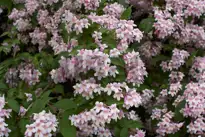
Beauty bush is an enchanting deciduous shrub that adds elegance to Danish gardens with its graceful flower clusters and arching branches.
Beauty bush thrives best in well-drained soil with a slightly acidic to neutral pH value. It is relatively adaptable and can do well in different soil types, but a rich, moist soil will promote healthy and lush growth. Adding organic matter such as compost can improve the soil's structure and nutrient content.
Beauty bush thrives in full sun to light shade. It can tolerate a certain amount of shade, but for the best flowering and compact growth it should be planted somewhere with enough sunlight. The position should also offer protection from strong wind to avoid damage to the delicate flowers.
Beauty bush is not only a visual delight – its hardiness and easy maintenance make it a valued plant in Danish gardens
5 common varieties in Danish gardens:
- Beauty bush (Kolkwitzia amabilis): The most widespread species, with arching branches and an abundance of pink to purple flower clusters in spring and summer.
- Beauty bush 'Pink Cloud' (Kolkwitzia amabilis 'Pink Cloud'): A variety with intense pink flowers and a more compact growth habit.
- Beauty bush 'Maradco' (Kolkwitzia amabilis 'Maradco'): A variety with unique, darker red flowers and upright growth.
- Beauty bush 'Dream Catcher' (Kolkwitzia amabilis 'Dream Catcher'): Known for its golden foliage and pink flowers, which add an extra dimension to the garden.
- Beauty bush 'Snow Day Surprise' (Kolkwitzia amabilis 'Snow Day Surprise'): A variety with white flowers and a compact shape that flowers abundantly in spring.
This guide is for guidance only. Landscaping and gardening is not an exact science, and a successful result can be affected by many variables, including (but not limited to): soil conditions, location, watering, temperatures, weather, application of fertiliser and mulch, and much more.