 da
 en


- Frontpage >
- Plant Encyclopedia >
- Beautyberry
Beautyberry
- Latin name: Callicarpa bodinieri
- Type: Ornamental shrub
- Light conditions: Full sun
- Soil conditions: Ordinary, well-drained
- Other: The beautiful purple berries are poisonous to humans, but birds enjoy the berries in winter, when food can be hard to find
Recommended Products

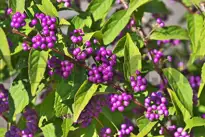
Beautyberry is a beautiful and decorative shrub that adds colour and interest to the garden. It is known for its beautiful purple or deep red berries, which appear in dense clusters in autumn and add a lively splash of colour. With an upright growth habit and compact varieties available, beautyberry is perfect as an ornamental plant in both small gardens and larger landscapes. Its ability to attract attention and add structure makes it an ideal addition that brings seasonal beauty and variety to any garden.
It thrives best in well-drained soil and prefers a slightly acidic to neutral pH. A humus-rich, moisture-retaining soil will help it thrive. It is important to avoid heavy clay soil, as this can cause poor drainage and damage the roots.
When it comes to light conditions, beautyberry prefers full sun for optimal growth and berry production. It can tolerate light shade, but flowering and berry colour may be reduced. The shrub should therefore be placed somewhere it gets at least 6-8 hours of sunlight a day.
These beautyberry varieties are well suited to Danish gardens and add an attractive and colourful dimension to the landscape:
- Callicarpa bodinieri var. giraldii 'Profusion': A popular variety with intense purple berries.
- Callicarpa bodinieri var. giraldii 'Le Comte': Known for its pink berries and compact growth.
- Callicarpa dichotoma 'Issai': A dwarf variety with pink-purple berries and beautiful autumn foliage.
- Callicarpa bodinieri var. giraldii 'Profusion': A beautiful variety with purple berries in dense clusters.
- Callicarpa bodinieri var. giraldii 'Profusion': A variety with deep red berries and an upright growth habit.
This guide is for guidance only. Landscaping and gardening is not an exact science, and a successful result can be affected by many variables, including (but not limited to): soil conditions, location, watering, temperatures, weather, application of fertiliser and mulch, and much more.