 da
 en


- Frontpage >
- Plant Encyclopedia >
- Bellflower
Bellflower
- Latin name: Campanula
- Type: Perennial
- Light conditions: Sun/partial shade (depending on the variety)
- Soil conditions: Ordinary, well-drained, moist
- Other: -
Recommended Products

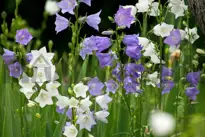
The bellflower is known for its charming bell-shaped flowers in various colours such as blue, purple and white. It adds a beautiful and romantic touch to any garden with its graceful appearance. Bellflowers are suitable for beds, borders and pots. They can be planted in groups to create a carpet of flowers or as single plants to draw attention to a specific area of the garden.
Bellflowers thrive best in well-drained soil with a neutral to slightly acidic pH. The soil should be moist but not wet, as standing water can lead to root rot. A rich, loose soil with enough organic matter is ideal for optimal growth. Here you can benefit from adding our soil conditioner, which can help improve the soil structure and provide extra nutrients for the plant.
These plants prefer sunny or lightly shaded areas of the garden. While some species can thrive in full sun, others will do better in partial shade, especially in hot summers. It is important to give the bellflower enough light for abundant flowering.
Widespread species in Denmark:
- Peach-leaved bellflower (Campanula persicifolia): With its slender, bell-shaped flowers in blue, white or purple shades, this species is a favourite in many gardens.
- Dalmatian bellflower (Campanula portenschlagiana): A carpet-forming plant with small, light blue flowers, perfect for cascading down stone walls or in hanging baskets.
- Harebell (Campanula rotundifolia): A wild species with delicate, light blue flowers on long stems, suitable for natural gardens or wild areas.
- Bellflower 'Samantha' (Campanula 'Samantha'): A hybrid with large flowers in pale blue-violet shades, ideal in pots or border beds.
- Milky bellflower (Campanula lactiflora): A tall plant with dense clusters of bell-shaped flowers in white or pale blue to pink colours, perfect as a backdrop in flower beds or by hedges.
This guide is for guidance only. Landscaping and gardening is not an exact science, and a successful result can be affected by many variables, including (but not limited to): soil conditions, location, watering, temperatures, weather, application of fertiliser and mulch, and much more.