 da
 en


- Frontpage >
- Plant Encyclopedia >
- Gladiolus
Gladiolus
- Latin name: Gladiolus
- Type: Perennial
- Light conditions: Full sun
- Soil conditions: Ordinary, well-drained, slightly sandy
- Other: Iris family
Recommended Products

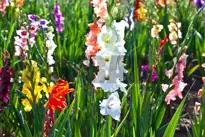
Gladiolus is a beautiful and colourful bulbous plant (corm) that enriches Danish gardens with its upright flower spikes and slender, sword-shaped leaves.
Gladioli thrive best in well-drained, light, sandy soil with good air circulation around the corms. They tolerate a wide range of soil types, but a neutral to slightly acidic pH is ideal. It is important to avoid heavy clay soil, which can lead to waterlogging and rot in the corms. The corms should be planted relatively deep to ensure stability.
Gladioli love the sun and thrive best in full sun. Place them somewhere they get at least 6-8 hours of direct sunlight a day. The sun is essential for flowering and the development of strong, upright stems. To prevent the plants from becoming too tall and floppy, it can be useful to support the stems.
Gladioli add height, colour and elegance to the summer garden and are popular among gardening enthusiasts because of their impressive flower spikes and versatility.
8 common species in Danish gardens:
- Gladiolus × grandiflorus: A classic type with large, colourful flower spikes and an impressive height.
- Gladiolus dalenii: Known for its deep red to orange flowers and narrow green leaves.
- Gladiolus communis: A wild species with small purple-pink flowers and a more natural growth habit.
- Gladiolus tristis: A species with cream-coloured flowers and a pleasant scent that is released in the evening.
- Gladiolus callianthus (Abyssinian gladiolus): With white flowers and purple-brown markings, this species is elegant and fragrant.
- Gladiolus nanus: A dwarf type suitable for pots or the front of flower beds, with smaller colourful flowers.
- Gladiolus 'Green Star': A lime-green variety that adds a unique colour element to the garden.
- Gladiolus 'Plum Tart': A variety with flower spikes in a rich plum colour that stand out in the flower bed.
This guide is for guidance only. Landscaping and gardening is not an exact science, and a successful result can be affected by many variables, including (but not limited to): soil conditions, location, watering, temperatures, weather, application of fertiliser and mulch, and much more.