 da
 en


- Frontpage >
- Plant Encyclopedia >
- Globe Amaranth
Globe Amaranth
- Latin name: Gomphrena globosa
- Type: Summer flower
- Light conditions: Full sun
- Soil conditions: Ordinary, well-drained, nutrient-rich
- Other: The flowers are good for drying, good in both beds and pots, attracts pollinators
Recommended Products

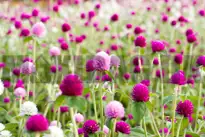
Globe amaranth is a beautiful and colourful annual summer flower that is loved for its distinctive spherical flower heads. Globe amaranth is an ideal plant for both the flower bed and pots on the terrace, and its drought tolerance makes it suitable for drier gardens. With its eye-catching spherical flowers, globe amaranth adds colour and interest to the garden and also attracts bees and butterflies.
Globe amaranth thrives best in well-drained, nutrient-rich soil. It is not particularly demanding when it comes to soil type and can be grown in anything from sand to clay. A slightly acidic to neutral pH value is ideal. It is important to avoid waterlogged conditions, as this can lead to root problems. Adding compost when planting can improve the soil structure and provide necessary nutrients.
Globe amaranth thrives in full sun. It needs at least 6-8 hours of direct sunlight a day to produce its distinctive, dense balls of flowers. Although it can tolerate light shade, a sunny position will optimise the plant's growth and flowering. Globe amaranth is known as a drought-tolerant plant, but regular watering is still important to keep it healthy and lush.
5 widespread varieties in Danish gardens:
- Gomphrena 'Fireworks': A variety with extra-long, colourful flower heads.
- Gomphrena globosa 'Buddy Purple': A variety with compact, deep purple flower balls.
- Gomphrena globosa 'QIS Mix': A mix with a wide range of colours, including pink, white and purple.
- Gomphrena 'Strawberry Fields': A variety with a strawberry-red colour and compact flower heads.
- Gomphrena globosa 'Gnome Purple': A dwarf variety with intense purple flowers and compact growth.
This guide is for guidance only. Landscaping and gardening is not an exact science, and a successful result can be affected by many variables, including (but not limited to): soil conditions, location, watering, temperatures, weather, application of fertiliser and mulch, and much more.