 da
 en


- Frontpage >
- Plant Encyclopedia >
- Globe Thistle
Globe Thistle
- Latin name: Echinops
- Type: Perennial
- Light conditions: Sun
- Soil conditions: Ordinary, well-drained, adaptable
- Other: Robust, drought-tolerant
Recommended Products

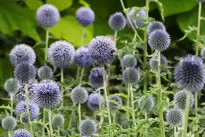
Globe thistle is a robust and decorative plant that adds structure and interest to Danish gardens. With its distinctive spherical flower heads and strong stems, globe thistle is a popular choice among gardening enthusiasts. To ensure it thrives, it is essential to understand its ideal soil and light conditions.
Globe thistle thrives best in well-drained soil with a neutral to slightly acidic pH value. It is adaptable and can be grown in different soil types, including clay, sand or ordinary garden soil. Good drainage is essential to prevent waterlogging and root rot. Although globe thistle can tolerate slightly dry conditions, it is important to keep even moisture in the soil to support healthy growth.
When it comes to light conditions, globe thistle is a sun-loving plant. It thrives in areas with full sun, where it gets at least six hours of direct sunlight a day. This makes it suitable for sunny beds, slopes or among other sun-loving plants. Globe thistle is known for its drought tolerance and can therefore also do well in more exposed areas.
Globe thistle is not only an ornamental plant – its flowers are also popular with pollinators such as bees and butterflies. Its drought tolerance and robust nature make it a valuable addition to many gardens and landscapes in Denmark.
Some types of globe thistle:
- Echinops ritro (Southern globe thistle): With distinctive spherical blue-violet flower heads.
- Echinops bannaticus (Blue globe thistle): A species with large spherical flower heads in a pale blue-violet shade.
- Echinops sphaerocephalus (Great globe thistle): Characterised by its round flower heads with white to greyish flowers.
- Echinops exaltatus (Russian globe thistle): With impressive tall stems and pale flower heads.
- Echinops humilis: A smaller species with blue-violet flowers and more compact growth.
- Echinops adenocaulos: With distinctive spherical flower heads and spiny stems.
This guide is for guidance only. Landscaping and gardening is not an exact science, and a successful result can be affected by many variables, including (but not limited to): soil conditions, location, watering, temperatures, weather, application of fertiliser and mulch, and much more.