 da
 en


- Frontpage >
- Plant Encyclopedia >
- Iris
Iris
- Latin name: Iris
- Type: Perennial
- Light conditions: Full sun (light shade)
- Soil conditions: Ordinary, well-drained
- Other: Iris family
Recommended Products
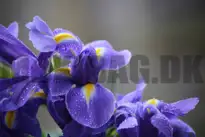
Iris is a beautiful and versatile perennial that brings elegance and colour to Danish gardens with its distinctive flowers and sword-shaped leaves.
Irises thrive best in well-drained soil with a neutral to slightly acidic pH. They are sensitive to waterlogging, so it is important to avoid heavy clay soils. Adding compost or well-rotted organic matter to the soil improves the structure and nutrient content. Iris bulbs and rhizomes should be planted fairly shallowly and not be covered by more than a few centimetres of soil.
Irises prefer full sun, but can also thrive in light shade. However, for the most abundant and colourful flowering, irises should be planted somewhere they get at least 6-8 hours of direct sunlight a day. In areas with very hot summers, light afternoon shade can be beneficial to protect against overheating.
Irises are popular not only for their flowers, but also for their ability to add structure and contrast to the garden with their sword-shaped leaves. Their many species and varieties make them suitable for different garden areas and styles.
8 common species in Danish gardens:
-
Bearded iris (Iris germanica): A classic garden iris with large, colourful flowers in shades of blue, purple, white or yellow.
-
Siberian iris (Iris sibirica): Known for its elegant flowers in shades of blue and purple.
-
Yellow flag iris (Iris pseudacorus): A water-loving iris with yellow flowers and sword-shaped leaves.
-
Dutch iris (Iris hollandica): With large, flat flowers in a wide range of colours, this iris is popular in flower beds.
-
Japanese iris (Iris ensata): Characterised by its large, velvety flowers in shades of violet, blue and white.
-
Stinking iris (Iris foetidissima): A shade-tolerant iris with brownish flowers and decorative seed heads.
-
Bearded iris (Iris barbata): An iris with distinctive "beards" on the petals and colourful flowers.
-
Dwarf iris (Iris pumila): A dwarf species with small but colourful flowers, suitable for the front of flower beds or rock gardens.
This guide is for guidance only. Landscaping and gardening is not an exact science, and a successful result can be affected by many variables, including (but not limited to): soil conditions, location, watering, temperatures, weather, application of fertiliser and mulch, and much more.