 da
 en


- Frontpage >
- Plant Encyclopedia >
- Jerusalem Sage
Jerusalem Sage
- Latin name: Phlomis
- Type: Perennial
- Light conditions: Sun
- Soil conditions: Ordinary, well-drained, adaptable
- Other: Easy to care for
Recommended Products

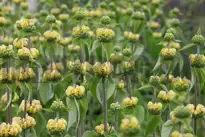
Jerusalem sage is a decorative and robust plant that brings a distinctive beauty to Danish gardens with its impressive flower whorls and dense foliage. This perennial is known for its resilience and easy maintenance, which makes it a popular addition to both ornamental gardens and natural areas. To achieve optimal growth, it is important to take the right soil and light conditions into account.
Jerusalem sage thrives best in good-quality, well-drained soil. It prefers a neutral to slightly alkaline pH value and can adapt to different soil types, including clay, sand or loam. Good drainage is essential to prevent the roots from standing in water, which can lead to root rot. This plant is known to cope in drier conditions, but it is still important to keep suitable moisture in the soil, especially during the hot summer months.
When it comes to light conditions, Jerusalem sage is a sun-loving plant. It thrives best in areas with full sun and will achieve optimal flowering in these conditions. It is suitable for positions along beds, in rock gardens or as part of ornamental gardens, where it can receive plenty of sunlight. It can also cope with light shade, but for the most impressive look and flowering it should have access to direct sunlight.
Some types of phlomis:
- Phlomis russeliana (Turkish sage): Characterised by its dense whorls of yellowish flowers and grey-green leaves.
- Phlomis fruticosa (Jerusalem sage): A shrubby phlomis with distinctive yellow flowers and grey-green leaves.
- Phlomis tuberosa (Tuberous Jerusalem sage): With impressive whorled flower spikes in pink-purple shades.
- Phlomis purpurea (Purple phlomis): Known for its purple-pink flowers and dense whorls.
- Phlomis italica (Balearic Island sage): With distinctive pale pink flowers and oval, woolly leaves.
Jerusalem sage is not only a beautiful plant – its resilience and ability to thrive in different conditions make it a versatile choice in Danish gardens. It adds both structure and colour, and its distinctive appearance makes it an eye-catcher in any garden.
This guide is for guidance only. Landscaping and gardening is not an exact science, and a successful result can be affected by many variables, including (but not limited to): soil conditions, location, watering, temperatures, weather, application of fertiliser and mulch, and much more.