 da
 en


- Frontpage >
- Plant Encyclopedia >
- Marigold (Tagetes)
Marigold (Tagetes)
- Latin name: Tagetes
- Type: Summer flower, ornamental plant
- Light conditions: -
- Soil conditions: -
- Other: Some species are edible
Recommended Products

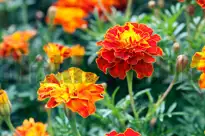
Marigold is a colourful and well-known annual that adorns Danish gardens with its distinctive flowers and aromatic foliage.
Marigolds thrive in good-quality, well-drained soil. They are not particularly demanding when it comes to soil type, but prefer a neutral to slightly acidic pH. A light, nutrient-rich soil with added compost or fertiliser will promote healthy growth. These plants can also cope well with slightly dry conditions, but regular watering is still important to keep them flowering.
Marigolds thrive best in full sun, and they are known to produce more abundant and colourful flowers in sunny areas. Place them somewhere they get at least 6-8 hours of direct sunlight a day. They can also cope with light shade, but flowering may be more limited in these conditions.
Marigolds are not only ornamental plants – their ability to deter pests and add colour to the garden makes them popular among gardening enthusiasts.
Some of the common types in Danish gardens:
- French marigold (Tagetes patula): The most common type, with compact, colourful flowers and aromatic foliage.
- African marigold (Tagetes erecta): Known for its tall, upright growth and large flower heads.
- Signet marigold (Tagetes tenuifolia): A type with finer leaves and colourful flowers in shades of red, orange and yellow.
- Lemon marigold (Tagetes tenuifolia 'Lemon Gem'): A variety with lemon-scented foliage and small yellow flowers.
- Mexican marigold (Tagetes lucida): A species with finer leaves and small yellow flowers, known for its use as a herb.
- Double-flowered marigold (Tagetes patula 'Hero'): A hybrid with double flowers in various colours.
- Tagetes 'Durango': A series of hybrids with large, colourful flowers and good heat tolerance.
- Tagetes 'Marigold Boy': A variety with compact growth and flaming orange flowers.
Although marigolds are mainly grown as ornamental plants, some varieties are edible and can be used in cooking.
It is important to note that not all varieties of marigold are edible, and it is recommended to grow them organically (without the use of pesticides or chemicals) if you intend to use them in cooking. Always double-check and make sure that the plant is correctly identified and considered edible before you use it in the kitchen.
This guide is for guidance only. Landscaping and gardening is not an exact science, and a successful result can be affected by many variables, including (but not limited to): soil conditions, location, watering, temperatures, weather, application of fertiliser and mulch, and much more.