 da
 en


- Frontpage >
- Plant Encyclopedia >
- Montbretia
Montbretia
- Latin name: Crocosmia
- Type: Perennial
- Light conditions: Sun
- Soil conditions: Ordinary, well-drained, moist
- Other: Adaptable, attracts pollinators
Recommended Products

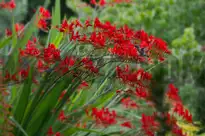
Montbretia is a colourful and eye-catching plant that adds a tropical flair to Danish gardens with its distinctive flower clusters and sword-shaped leaves. This deciduous plant originally comes from South Africa, but has become popular in many garden areas because of its attractive appearance and ease of cultivation. To ensure optimal growth, it is important to take the right soil and light conditions into account.
Montbretia thrives best in good-quality, well-drained soil. It is relatively versatile and can adapt to different soil types, but prefers moist, nutrient-rich soil. A neutral to slightly acidic pH value is ideal to promote healthy growth. Montbretia is also known to cope with dry conditions, but regular watering will promote abundant flowering.
When it comes to light conditions, montbretia is a sun-loving plant. It thrives best in areas with full sun, where it can receive at least six hours of direct sunlight a day. This makes montbretia well suited to positions in open beds, along garden edges or in pots on sunny terraces. Although it can tolerate light shade, its flowering will be most abundant in sunny conditions.
Here is a list of some types of montbretia:
- Crocosmia x crocosmiiflora (Garden montbretia): A popular hybrid that produces clusters of tubular flowers in shades of orange, red and yellow.
- Crocosmia aurea (Golden montbretia): Characterised by its clusters of bright orange-yellow flowers and upright growth.
- Crocosmia pottsii (Potts' montbretia): With intense orange-red flowers and sword-shaped leaves.
- Crocosmia masoniorum (Giant montbretia): A species with deep orange-red flowers and arching growth.
- Crocosmia 'Lucifer': A variety known for its slender, tubular flowers in an intense red colour.
Montbretia is not only known for its beautiful flowers, but also for attracting butterflies and bees to the garden. With suitable care and attention to its growing conditions, montbretia can be a magnificent addition to Danish gardens.
This guide is for guidance only. Landscaping and gardening is not an exact science, and a successful result can be affected by many variables, including (but not limited to): soil conditions, location, watering, temperatures, weather, application of fertiliser and mulch, and much more.