 da
 en


- Frontpage >
- Plant Encyclopedia >
- Persian Ironwood
Persian Ironwood
- Latin name: Parrotia persica
- Type: Shrub (small tree)
- Light conditions: Full sun, partial shade (adaptable)
- Soil conditions: Ordinary, well-drained, adaptable
- Other: Hardy
Recommended Products

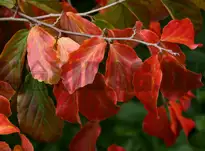
Persian ironwood is a charming deciduous shrub or small tree that brings variety to Danish gardens with its unique bark, colourful autumn foliage and winter flowers. This plant is valued for its hardiness and decorative qualities. To ensure optimal growth, it is important to take the right soil and light conditions into account.
Persian ironwood thrives in good-quality, well-drained soil. It is not particularly demanding when it comes to soil type and can grow in anything from clay to sand. However, it is important to avoid waterlogging, as this can damage its roots. A neutral to slightly acidic pH value is preferred, but Persian ironwood is relatively adaptable and can thrive in slightly alkaline soil.
When it comes to light conditions, Persian ironwood is also versatile. It thrives in both full sun and partial shade. This makes it suitable for positions along garden edges, in beds or as a smaller ornamental plant in larger gardens. Persian ironwood is also known to tolerate a little shade, which makes it useful in different gardens and landscape designs.
Persian ironwood is not only an ornamental shrub – its hardiness and attractive qualities also make it a well-chosen feature in Danish gardens. With the right growing conditions, Persian ironwood will contribute colour and structure all year round.
Some types of parrotia:
- Parrotia persica (Persian ironwood): The most widespread species, known for its multicoloured bark, autumn foliage in red shades and small winter flowers.
- Parrotia persica 'Vanessa': A variety with spectacular autumn foliage in orange and red tones.
- Parrotia persica 'Pendula': A variety with a graceful, weeping growth habit and similar qualities to the species.
- Parrotia subaequalis (Chinese ironwood): A closely related species that shares some characteristics with Persian ironwood.
- Parrotia subaequalis var. breviacuta: A variety with shorter pointed leaves and more upright growth.
This guide is for guidance only. Landscaping and gardening is not an exact science, and a successful result can be affected by many variables, including (but not limited to): soil conditions, location, watering, temperatures, weather, application of fertiliser and mulch, and much more.