 da
 en


- Frontpage >
- Plant Encyclopedia >
- Poppy
Poppy
- Latin name: Papaver
- Type: Summer flower
- Light conditions: Sun
- Soil conditions: Ordinary, well-drained
- Other: See also Peony-flowered Poppy
Recommended Products

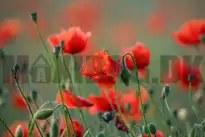
Poppies are beautiful flowering plants that enrich the Danish landscape with their distinctive flowers and beauty. These flowers come in varying colours and sizes and are known for their delicate petals and distinctive seed capsules. To ensure optimal growth and flowering, it is essential to understand the right soil and light conditions for poppies.
Poppies thrive best in well-drained, slightly calcareous soil. They can grow in different soil types, but prefer a neutral to slightly alkaline pH value. Good drainage is essential to avoid waterlogging, which can damage the poppy roots. These plants tend to do well in less fertile soils and are often found naturally in meadows, fields and along roadsides.
When it comes to light conditions, poppies are sun-loving plants. They thrive best in areas with full sun, where they can get at least six hours of direct sunlight a day. This makes poppies well suited to open areas such as meadows, hills or gardens, where they can display their colourful flowers in the sunshine.
The natural beauty and flowering character of poppies make them a much-loved part of the Danish landscape. Their adaptability to different growing conditions and colourful flowers also make them suitable for growing in gardens, where they can add a touch of wild flowers to flower beds.
Some poppy species:
- Papaver rhoeas (Common poppy): A common species with red petals, often with a black spot at the base, often found in fields.
- Papaver dubium (Long-headed poppy): A smaller poppy species with pale red to orange-red flowers.
- Papaver argemone (Prickly poppy): Characterised by its small red flowers and finely divided leaves.
- Papaver orientale (Oriental poppy): A larger poppy species with large, colourful flowers in shades of red, orange and pink.
- Papaver cambricum (Welsh poppy): A shorter species with yellow or orange flowers, often found in shady places.
- Papaver radicatum (Arctic poppy): A low-growing species with yellow or white flowers and hairy stems.
- Papaver hybridum (Rough poppy): With small purplish-red flowers and finely divided leaves.
- Papaver nudicaule (Iceland poppy): Characterised by its low growth and flowers in shades of yellow, orange or white.
- Papaver setigerum (Bristly poppy): A smaller species with pale purple flowers and grey-green leaves.
This guide is for guidance only. Landscaping and gardening is not an exact science, and a successful result can be affected by many variables, including (but not limited to): soil conditions, location, watering, temperatures, weather, application of fertiliser and mulch, and much more.