 da
 en


- Frontpage >
- Plant Encyclopedia >
- Pot Marigold
Pot Marigold
- Latin name: Calendula officinalis
- Type: Summer flower
- Light conditions: Full sun, tolerates light shade
- Soil conditions: Ordinary, well-drained, nutrient-rich (adaptable)
- Other: Annual, easy to grow
Recommended Products

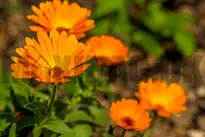
Pot marigold is a colourful and popular annual known for its brilliant orange and yellow flowers. In addition to its aesthetic appeal, pot marigold is also known for its medicinal properties and is traditionally used in healing ointments. It also attracts important pollinators such as bees and butterflies to the garden, which makes it a beneficial addition to the flower bed. Its easy-going nature and ability to thrive in different soil types make pot marigold an ideal plant for both beginners and experienced gardening enthusiasts.
Pot marigold thrives in good-quality, well-drained, nutrient-rich soil. It can adapt to different soil types, but prefers a light sandy or loamy soil. A neutral to slightly acidic pH value is ideal for pot marigold. It is important to avoid waterlogged conditions, as this can lead to root problems. Adding compost when planting can help improve the soil structure and add necessary nutrients.
Pot marigold thrives best in full sun. It needs at least 6-8 hours of direct sunlight a day to produce abundant flowers. Although it can tolerate light shade, a sunny position will optimise flowering and plant growth. Pot marigold is a hardy plant that can be grown in different garden areas, as long as it receives enough sunlight.
Pot marigold is not only a delight to the eye – its flowers have also traditionally been used in medicine and cosmetics because of their soothing properties. Growing different varieties can add colour and beauty to the garden as well as useful applications.
Some of the most widespread varieties and seed mixes in Denmark:
- Calendula officinalis 'Pacific Beauty': A variety with colourful, dense flowers in shades of orange and yellow.
- Calendula officinalis 'Orange King': A variety with deep orange flowers and distinctive dark centres.
- Calendula officinalis 'Bon Bon Mix': A mix with flowers in various shades of orange and yellow.
- Calendula officinalis 'Art Shades': A variety with flowers in various artistic shades.
- Calendula officinalis 'Indian Prince': A variety with dark, bronze-orange flowers.
- Calendula officinalis 'Lemon Sorbet': A pale yellow variety with fresh lemon-coloured flowers.
- Calendula officinalis 'Zeolights': A variety with light, zoned flowers in orange and yellow.
- Calendula officinalis 'Chrysantha': A classic variety with pale yellow flowers.
- Calendula officinalis 'Snow Princess': A pale-flowered variety with a clean and fresh look.
- Calendula officinalis 'Apricot Twist': A variety with flowers in shades of apricot and pink.
- Calendula officinalis 'Neon': A variety with eye-catching, brightly coloured flowers.
- Calendula officinalis 'Flashback Mix': A mix with flowers in contrasting colour combinations.
- Calendula officinalis 'Touch of Red Mix': A mix with red accents in the flowers.
- Calendula officinalis 'Citrus Cocktail': A variety with flowers in fresh citrus colours.
- Calendula officinalis 'Pink Surprise': A surprising variety with pinkish flowers.
- Calendula officinalis 'Fiesta Gitana': A variety with small, colourful flowers in a mix.
- Calendula officinalis 'Cantaloupe': A variety with flowers in shades of melon and orange.
- Calendula officinalis 'Greenheart Orange': A variety with orange flowers and green centres.
- Calendula officinalis 'Art Deco Mix': A modern mix with an artistic play of colours.
This guide is for guidance only. Landscaping and gardening is not an exact science, and a successful result can be affected by many variables, including (but not limited to): soil conditions, location, watering, temperatures, weather, application of fertiliser and mulch, and much more.