 da
 en


- Frontpage >
- Plant Encyclopedia >
- Spindle
Spindle
- Latin name: Euonymus
- Type: Ornamental shrub, hedge, ground cover, standard
- Light conditions: Full sun, (light shade)
- Soil conditions: Ordinary, well-drained
- Other: Versatile use, robust
Recommended Products

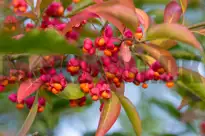
Spindle is a versatile and decorative shrub that adds colour and structure to gardens and landscapes. This plant comes in many varieties and is known for its distinctive leaves and fruits.
Spindle thrives best in good-quality, well-drained soil. It is relatively adaptable in terms of soil type and pH, but prefers a slightly acidic to neutral pH value. Avoid standing water, as spindle does not thrive in waterlogged soil. Adding organic matter such as compost can improve the soil structure and nutrient content.
Spindle is a sun-loving plant and thrives best in full sun to light shade. For the most compact growth and colourful leaves, it should be planted somewhere it receives at least six hours of direct sunlight a day. Some varieties of spindle can tolerate light shade, but sunlight is ideal for promoting abundant flowering and colourful autumn leaves.
Spindle is known for its hardiness and versatility in landscape design. With a range of varieties and colours, spindle can be a valuable addition to formal gardens, natural settings and coastal landscapes in Denmark.
List of spindle species in Denmark:
- Euonymus europaeus (Common spindle): A species native to Denmark, known for its red fruits in autumn and distinctive red autumn leaves.
- Euonymus alatus (Winged spindle): Known for its winged branches, which turn spectacularly red in autumn.
- Euonymus fortunei (Climbing spindle): A low-growing, evergreen species, popular as ground cover, which can climb up surfaces.
- Euonymus japonicus (Japanese spindle): An evergreen species with leathery leaves, often used as a hedge or ornamental shrub.
- Euonymus bungeanus (Bunge's spindle): A species with lance-shaped leaves and attractive seed capsules.
This guide is for guidance only. Landscaping and gardening is not an exact science, and a successful result can be affected by many variables, including (but not limited to): soil conditions, location, watering, temperatures, weather, application of fertiliser and mulch, and much more.