 da
 en


- Frontpage >
- Plant Encyclopedia >
- Spurge (Euphorbia)
Spurge (Euphorbia)
- Latin name: Euphorbia
- Type: Perennial
- Light conditions: Sun, partial shade
- Soil conditions: Ordinary, well-drained, adaptable
- Other: The milky sap can irritate skin and mucous membranes
Recommended Products

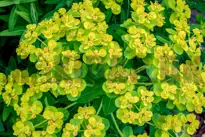
Spurge is a large and diverse plant genus found in many shapes and sizes in Danish gardens and natural areas. Known for its milky sap and often small green flowers or coloured bracts, euphorbia is a robust plant with some specific soil and light requirements.
Spurge thrives in well-drained soil of moderate fertility. It can adapt to different soil types, including clay, sand or loam, but it is essential that the soil has good drainage to avoid excess water, which can damage the plant's roots. The soil pH can also vary, but most euphorbia species thrive in neutral to slightly acidic soil.
When it comes to light conditions, spurge is a sun-loving plant that prefers full sun or partial shade. It thrives best in areas that get at least six hours of direct sunlight a day. Its position in the garden should take this requirement into account, and spurge can therefore be well suited to beds, borders or places where it can get enough sunlight.
The diversity of spurge makes it a versatile plant in the garden, and its succulent character sometimes makes it suitable for drought-tolerant areas. However, it is important to handle spurge with care, as the milky sap can irritate skin and mucous membranes.
Some spurge species:
- Euphorbia amygdaloides (Wood spurge): Characterised by its dark green leaves and yellow-green flowers.
- Euphorbia characias (Mediterranean spurge): A tall species with greyish leaves and upright flower heads.
- Euphorbia cyparissias (Cypress spurge): With fine, narrow leaves and yellow-green flower heads.
- Euphorbia epithymoides (Cushion spurge): Characterised by its bright yellow flowers in spring.
- Euphorbia lathyris (Caper spurge): An upright plant with distinctive, elongated flower heads.
- Euphorbia myrsinites (Myrtle spurge): A carpet-forming species with fleshy blue-grey leaves and yellow flowers.
- Euphorbia palustris (Marsh spurge): Thrives in moist areas and has yellow-green flower heads.
- Euphorbia peplus (Petty spurge): A low-growing species with small green flowers.
- Euphorbia robbiae (Mrs Robb's bonnet): With large, leathery leaves and green flower heads.
- Euphorbia rigida (Upright myrtle spurge): Characterised by its stiff, upright stems and yellow flowers.
This guide is for guidance only. Landscaping and gardening is not an exact science, and a successful result can be affected by many variables, including (but not limited to): soil conditions, location, watering, temperatures, weather, application of fertiliser and mulch, and much more.