 da
 en


- Frontpage >
- Plant Encyclopedia >
- Thuja
Thuja
- Latin name: Thuja
- Type: Ornamental shrub, hedging plant
- Light conditions: Full sun, light shade
- Soil conditions: Ordinary, well-drained
- Other: Can be clipped into shape
Recommended Products

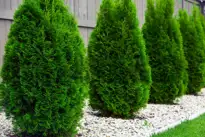
Thuja, also known as arborvitae, is a genus of conifers often grown as ornamental shrubs or hedges. These evergreen trees are popular because of their dense growth and ability to form screens.
Thuja thrives best in well-drained soil of moderate quality. It is relatively adaptable and can grow in different soil types, as long as the soil is not waterlogged. A neutral to slightly acidic pH value is ideal for thuja. Adding organic matter such as compost when planting can improve the soil's structure and nutrient content. It is important to avoid places with standing water, as thujas are sensitive to root rot.
Thuja thrives in full sun to partial shade. It can grow well in areas with direct sunlight, but can also tolerate light shade. For the most compact and full growth, it is best to plant thujas somewhere they get at least six hours of direct sunlight a day. In shady areas, growth can become more open, and the shrub can stretch more to reach the light.
Thujas are not only valuable as ornamental shrubs – they also serve as effective hedges or screens because of their dense growth. With suitable soil and light conditions, thujas will thrive and provide both beauty and function in the garden.
List of some Thuja species in Denmark:
- Thuja occidentalis (Eastern arborvitae): A popular species with dense, scale-like needles and a conical growth habit. Also known as white cedar.
- Thuja plicata (Western red cedar): A large-growing species with needles in a beautiful green colour. Also grown as a forest tree and known for its aromatic wood.
- Thuja koraiensis (Korean thuja): A species that originates from Korea and has a more conical shape. The needles are green and scale-like.
- Thuja standishii x plicata (Thuja 'Green Giant'): A hybrid thuja known for its fast growth and dense branches. Ideal as a hedge or screening plant.
This guide is for guidance only. Landscaping and gardening is not an exact science, and a successful result can be affected by many variables, including (but not limited to): soil conditions, location, watering, temperatures, weather, application of fertiliser and mulch, and much more.