 da
 en


- Frontpage >
- Plant Encyclopedia >
- Tulip
Tulip
- Latin name: Tulipa
- Type: Flower
- Light conditions: Sun
- Soil conditions: Ordinary, well-drained, light
- Other: Iconic spring flower, versatile
Recommended Products

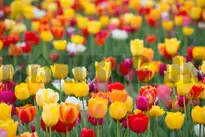
The tulip is an iconic spring flower that adds an explosion of colour to Danish gardens and landscapes. These beautiful flowers, which come in a wide range of shapes and shades, are known for their elegance and symbolic meaning. To grow tulips successfully, it is important to understand the right soil and light conditions.
Tulips thrive best in well-drained soil with a neutral to slightly acidic pH value. The soil should be loose and rich to allow good air circulation and avoid waterlogging at the roots. Their preferred soil type can vary, but a well-composed garden soil is often suitable. It is important to avoid heavy clay soil, which can retain water and potentially damage the bulbs.
When it comes to light conditions, tulips are sun-loving plants. They thrive best in areas with full sun, where they get at least six hours of direct sunlight a day. This is especially true in spring, when they start growing and flowering. Tulips can be grown in flower beds, in groups or even in large clumps of bulbs, and they can also be grown in pots or containers on terraces or balconies.
Tulips are not only a pleasure for the eye – they also symbolise spring and new beginnings. With the right growing conditions, tulips can create an impressive and colourful display in Danish gardens, rejoicing in the spring sun.
Some tulip species:
- Tulipa gesneriana (Garden tulip): The most common and well-known type of tulip, known for its large, colourful flowers.
- Tulipa kaufmanniana (Waterlily tulip): Characterised by its open flowers and often two-coloured petals.
- Tulipa fosteriana (Emperor tulip): Large, colourful flowers that are popular in spring gardens.
- Tulipa greigii (Greigii tulip): Low-growing species with distinctive striped or mottled leaves and colourful flowers.
- Tulipa praestans (Multi-flowered tulip): Characterised by several flowers per stem and early flowering.
- Tulipa tarda (Late tulip): A small botanical tulip species with star-shaped flowers.
- Tulipa clusiana (Lady tulip): Characterised by its long, pointed petals.
- Tulipa humilis (Dwarf tulip): Low-growing and suitable for rock gardens and spring borders.
- Tulipa viridiflora (Green-flowered tulip): Characterised by green stripes on the petals.
- Tulipa biflora (Two-flowered tulip): With distinctive clusters of two or more flowers per stem.
This guide is for guidance only. Landscaping and gardening is not an exact science, and a successful result can be affected by many variables, including (but not limited to): soil conditions, location, watering, temperatures, weather, application of fertiliser and mulch, and much more.