 da
 en


- Frontpage >
- Plant Encyclopedia >
- Violet
Violet
- Latin name: Viola
- Type: Flower, herb
- Light conditions: Partial shade, full sun
- Soil conditions: Ordinary, well-drained (moist)
- Other: -
Recommended Products

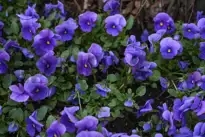
The violet is a charming and versatile plant that enriches gardens with its colourful flowers and delicate leaves. To ensure optimal growth and flowering, it is important to understand the right soil and light conditions for violets.
Violets thrive best in well-drained, moist soil with a good amount of organic matter. They prefer a slightly acidic to neutral pH value and can adapt to different soil types, as long as the drainage is effective. Enrich the soil with compost when planting to improve the nutrient content and structure. Violets thrive in moist soil, but it is important to avoid waterlogging to prevent root problems.
Violets thrive in areas with partial shade to full sun. They can tolerate some shade and will often flower abundantly in spring, when the trees are still bare and let in more sunlight. However, a sunny position will contribute to more compact growth and abundant flowering. Place violets somewhere that receives at least 4-6 hours of direct sunlight a day to optimise their performance.
These violet species thrive in many different settings and offer a wide range of colours and shapes for the garden. By choosing suitable species and meeting their soil and light requirements, you can create a beautiful and varied violet garden.
- Garden pansy (Viola × wittrockiana): A popular hybrid with large, colourful flowers, often used in beds and pots.
- Sweet violet (Viola odorata): A fragrant species with small purple flowers that thrives on the woodland floor.
- Heath dog-violet (Viola canina): A wild species with small blue-violet flowers and heart-shaped leaves.
- Marsh violet (Viola palustris): A species that thrives in wetlands and has pale lilac flowers.
- Viola tricolor (Wild pansy): A wild species with distinctive purple, yellow and white flowers.
- Horned violet (Viola cornuta): A species with spurred flowers in shades of blue, purple and white.
- Viola hederacea (Australian violet): A creeping species with small purple-and-white flowers and fine foliage.
- Viola sororia (Common blue violet): A wild species with purple to blue-violet flowers.
- Viola trinervata: A small species with pale flowers and three-veined leaves.
- Viola riviniana (Common dog-violet): A wild species with flowers in shades of purple.
This guide is for guidance only. Landscaping and gardening is not an exact science, and a successful result can be affected by many variables, including (but not limited to): soil conditions, location, watering, temperatures, weather, application of fertiliser and mulch, and much more.