 da
 en


- Frontpage >
- Plant Encyclopedia >
- Witch Hazel
Witch Hazel
- Latin name: Hamamelis
- Type: Shrub
- Light conditions: Sun, partial shade
- Soil conditions: Ordinary, well-drained, nutrient-rich (adaptable)
- Other: Hardy
Recommended Products

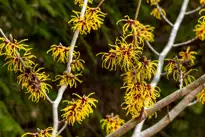
Witch hazel, scientifically known as Hamamelis, is an enchanting winter-flowering shrub that adds colour and scent to Danish gardens at a time when most plants are still dormant. With its unusual, ribbon-like flowers and distinctive fragrance, witch hazel creates a unique and impressive atmosphere in the landscape. To ensure it thrives, it is important to understand its ideal soil and light conditions.
Witch hazel thrives best in good-quality, well-drained, moist soil. It prefers a slightly acidic to neutral pH value and can be grown in different soil types, including clay, sand or loam. Good drainage is essential to avoid waterlogging, which can damage the plant's roots. Witch hazel also thrives in areas with high humidity, so it is important to keep the soil moist, especially in dry periods.
When it comes to light conditions, witch hazel is a plant that thrives in partial shade to full sun. It can be grown successfully in areas with filtered sunlight or dappled shade. This makes witch hazel well suited to positions under taller trees or along woodland edges, where it can enjoy bright conditions without being exposed to intense midday sun.
These witch hazel species enrich Danish gardens with their early flowering and colourful autumn foliage, which makes them a valued addition to many gardens and parks.
Some witch hazel species:
-
Japanese witch hazel (Hamamelis japonica): Characterised by its ribbon-like yellow flowers and early flowering, which brings life to the garden in the winter months.
-
Chinese witch hazel (Hamamelis mollis): An impressive species with golden-yellow flowers and a delicate scent that enriches the garden in late winter.
-
Ozark witch hazel (Hamamelis vernalis): An American species that delights with its fragrant, early flowers in yellow to red shades in late winter and early spring.
-
Common witch hazel (Hamamelis virginiana): A North American species that stands out with its yellow flowers in autumn and fragrant qualities, often used in traditional medicine.
-
Hybrid witch hazel (Hamamelis x intermedia): A group of hybrids created by crossing different species, combining different colours and flowering times, such as 'Arnold Promise' with golden flowers and 'Diane' with red flowers.
This guide is for guidance only. Landscaping and gardening is not an exact science, and a successful result can be affected by many variables, including (but not limited to): soil conditions, location, watering, temperatures, weather, application of fertiliser and mulch, and much more.