 da
 en


- Frontpage >
- Plant Encyclopedia >
- Cherry (fruit tree)
Cherry (fruit tree)
- Latin name: Prunus
- Type: Fruit tree
- Light conditions: Sun, partial shade
- Soil conditions: Ordinary, well-drained
- Other: Some varieties are self-pollinating
Recommended Products

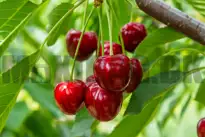
The cherry tree is a popular and beautiful addition to Danish gardens. Its distinctive flowers and delicious fruit make it a much-loved feature in garden design. The cherry tree is not only a source of delicious cherries – it also adds aesthetic beauty to the garden with its spring flowers and green foliage that follows. The tree can be used as a fantastic eye-catcher or as a central feature in an orchard.
Cherry trees thrive best in well-drained soil with a slightly acidic to neutral pH. A humus-rich, nutrient-rich soil is ideal. It is important to avoid standing water, as cherry trees are sensitive to their roots being wet for long periods.
Cherry trees thrive best in full sun, and sunny positions promote optimal fruit production. Avoid shady areas to achieve healthy and productive trees.
Some of the widespread types in Danish gardens:
- Sweet cherry (Prunus avium): Known for its large, sweet cherries. Used fresh, in desserts or for juice.
- Sweet cherry 'Stella' (Prunus avium 'Stella'): A self-pollinating variety with large, juicy berries. Suitable for eating fresh and for baking.
- Morello, sour cherry (Prunus cerasus): Smaller and more tart cherries. Perfect for jam, baking and juice. Self-pollinating.
- 'Regina' cherry (Prunus avium 'Regina'): Dark red, sweet cherries. Good for preserving and fresh desserts.
- 'Lapins' cherry (Prunus avium 'Lapins'): A large-fruited variety with sweet berries. Ideal for eating fresh and for desserts.
Cherries can be eaten fresh as a delicious snack or used as an ingredient in salads. They are well suited to baking in pies, cakes and pancakes, and perfect for making jams, marmalades and juice.
This guide is for guidance only. Landscaping and gardening is not an exact science, and a successful result can be affected by many variables, including (but not limited to): soil conditions, location, watering, temperatures, weather, application of fertiliser and mulch, and much more.