 da
 en


- Frontpage >
- Plant Encyclopedia >
- Ericaceous Bed - Plants
Ericaceous Bed - Plants
- Latin name: -
- Type: Bed
- Light conditions: Partial shade, sun
- Soil conditions: Acidic (pH value 4.0-5.5), well-drained
- Other: See also Ericaceous Bed - Edible
Recommended Products

An ericaceous bed is a specific type of garden bed tailored to plants that thrive in acidic soil. Ericaceous beds create optimal conditions for acid-loving plants, and they are ideal for growing a range of colourful and beautiful plants that bring life and variety to the garden.
Ericaceous beds need soil with a pH value between 4.0 and 5.5 to meet the preferences of acid-loving plants. To achieve this, peat moss can be used and added every year. These components improve the soil structure, increase the acidity and ensure that the plants have access to the nutrients they need. Good drainage is also important to prevent waterlogging, as too much moisture can be harmful to some of these plants.
Ericaceous beds thrive best in areas with partial shade to full sun. Many acid-loving plants can cope with light shade, but to ensure optimal growth and flowering, it is recommended to place the ericaceous bed somewhere it gets at least 4-6 hours of sunlight a day.
Some of the most widespread plants in an ericaceous bed in Danish gardens:
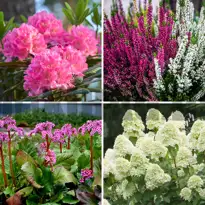
- Rhododendron (Rhododendron spp.): These colourful shrubs are known for their large flowers in many shades. They thrive in acidic soil and are a popular addition to ericaceous beds.
- Azalea (Rhododendron spp.): Closely related to rhododendron, azaleas also produce beautiful flowers and are well suited to ericaceous beds.
- Camellia (Camellia spp.): These evergreen shrubs have attractive flowers and thrive in acidic soil. They add elegance to the ericaceous bed.
- Hydrangea (Hydrangea spp.): Certain varieties of hydrangea thrive in acidic soil and produce large, colourful flower heads. The soil pH can also affect the colour of hydrangea flowers.
- Pieris (Pieris spp.): Pieris is an evergreen shrub with clusters of small flowers and red leaves in spring.
- Heather (Calluna vulgaris and Erica spp.): Heather is a classic plant for ericaceous beds and adds texture and colour with its small flowers and needle-like leaves.
- Bergenia (Bergenia spp.): With large, leathery leaves and colourful flower clusters, bergenia also thrives in acidic soil and is suitable for ericaceous beds.
- Skimmia (Skimmia spp.): These evergreen shrubs produce fragrant flowers and berries and are well suited to acidic soil conditions.
Plants sold and grown in Danish gardens:
Many nurseries and garden centres in Denmark offer a wide range of acid-loving plants suitable for ericaceous beds. Popular varieties of rhododendron, azalea, hydrangea and other acid-loving plants can be found locally. The availability of plants varies depending on the specific nursery or retailer. It is always a good idea to consult garden experts or local nurseries to find the best choices for your ericaceous bed and your area.
This guide is for guidance only. Landscaping and gardening is not an exact science, and a successful result can be affected by many variables, including (but not limited to): soil conditions, location, watering, temperatures, weather, application of fertiliser and mulch, and much more.