 da
 en


- Frontpage >
- Plant Encyclopedia >
- Redcurrant
Redcurrant
- Latin name: Ribes rubrum
- Type: Berry bush
- Light conditions: Sun
- Soil conditions: Ordinary, well-drained, nutrient-rich
- Other: Hardy, reliable berry harvest; redcurrants can also be planted in the edible ericaceous bed
Recommended Products

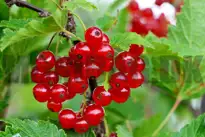
Redcurrant is a lovely berry bush, loved for its juicy red berries and versatility. These bushes enrich Danish gardens and kitchen gardens with their productivity and ease of cultivation. To achieve healthy growth and an abundant berry harvest, it is important to understand the optimal soil and light conditions for redcurrants.
Redcurrants thrive best in well-drained, nutrient-rich soil. They prefer a slightly acidic to neutral pH value, and the soil should retain moisture well. Compost or other organic matter can be added to improve the soil's structure and nutrient content. Here you can benefit from adding our soil conditioner, which can help improve the soil structure and provide extra nutrients for the plant. It is important to avoid waterlogging, as too much water around the roots can result in root problems.
When it comes to light conditions, redcurrants are sun-loving plants. They thrive best in full sun, where they receive at least six hours of direct sunlight a day. However, redcurrants can also tolerate light shade, especially in warmer climates, where a little shade can protect them from excessive heat. This makes redcurrants versatile and suitable for many different garden areas.
These currants are not only tasty – they also add colour and beauty to the garden. Redcurrants are known for their hardiness and reliable harvest, which makes them an indispensable part of many Danish gardens.
Some types of currant:
- Ribes rubrum 'Rovada' (Redcurrant 'Rovada'): A popular variety known for its large red berries and sweet taste.
- Ribes rubrum 'Jonkheer van Tets' (Redcurrant 'Jonkheer van Tets'): An early variety with red berries and a tart taste.
- Ribes rubrum 'Hinnonmaki Red' (Redcurrant 'Hinnonmaki Red'): Characterised by its clusters of red berries and juicy taste.
- Ribes rubrum 'White Pearl' (Whitecurrant 'White Pearl'): A variety with pale, translucent berries and a slightly tart taste.
- Ribes nigrum (Blackcurrant): Also known as blackcurrant, with dark berries and a distinctive taste.
- Ribes rubrum 'Rondom' (Redcurrant 'Rondom'): A variety with large red berries and a sweetish taste.
- Ribes rubrum 'Red Lake' (Redcurrant 'Red Lake'): With clusters of red berries and a fresh taste.
- Ribes rubrum 'Junifer' (Redcurrant 'Junifer'): An early variety with large red berries and a sweet taste.
- Ribes rubrum 'Titania' (Redcurrant 'Titania'): Characterised by its large berries and sweet taste.
- Ribes rubrum 'Gloire des Sablons' (Pink currant 'Gloire des Sablons'): An old variety with large clusters of pink berries.
Redcurrants are widely used in the kitchen to make juice, jelly, jam and desserts. The juicy berries add a tart-sweet taste and a high vitamin C content. Redcurrants can also be used in baking, smoothies and as a fresh topping on yoghurt or ice cream. Their versatile character makes them a popular ingredient in both sweet and savoury dishes.
This guide is for guidance only. Landscaping and gardening is not an exact science, and a successful result can be affected by many variables, including (but not limited to): soil conditions, location, watering, temperatures, weather, application of fertiliser and mulch, and much more.